
-
Beehives
- Complete beehive
- Accessories
-
Nuc hives
- Nucs by format
- With bees & mating
- Spare parts
-
Bee equipment
- For the apiary
- For the beekeeper
-
Clothing
- Clothing Accessories
-
Beeswax
-
Pure beeswax
- Beeswax and foundation
- Beeswax foundations
- Melting and rolling beewax
-
Pure beeswax
-
Bee feed
- Accessories and source materials
- Utensils
-
Bee health
- Varroa Treatments
- Diseases control
- Nutraceuticals
-
Extraction and bottling
- Before extraction
- Honey extraction
- After extraction
-
Bee pollen
- Harvest
- Indicted
-
Honey packaging
- Flasks per utility
- Flasks by size
- Other packaging
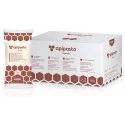 Apipasta with vitamins 15kg
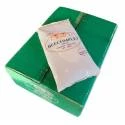 Beecomplet® Spring 14Kg
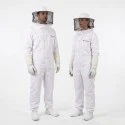 Beekeeper suit with round veil
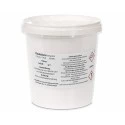 Oxalic acid 1kg
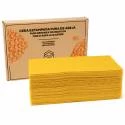 Beeswax Foundation 5kg
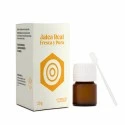 Fresh royal jelly 20g
 Classic honey jar 1kg comb-lines TO77 - Pack of 16 units
 Promotor L Apis 1 litre
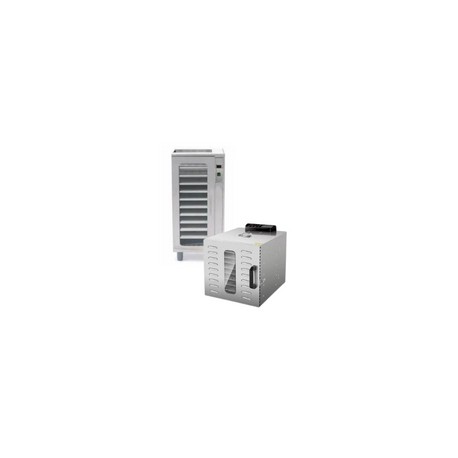
Pollen dryers
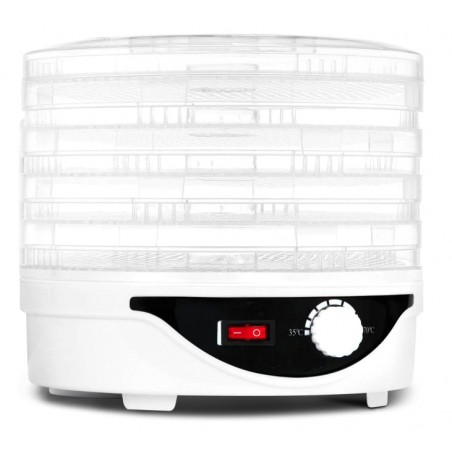
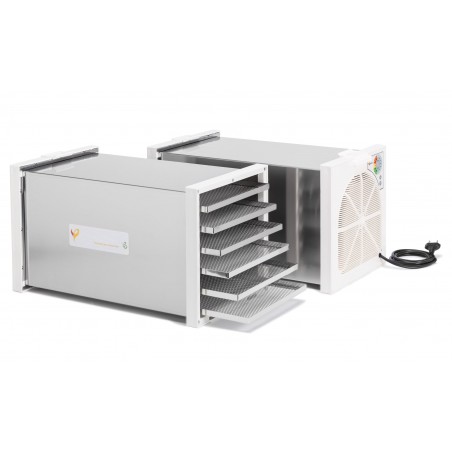
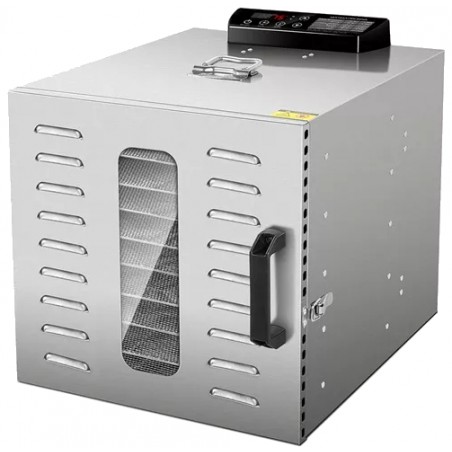
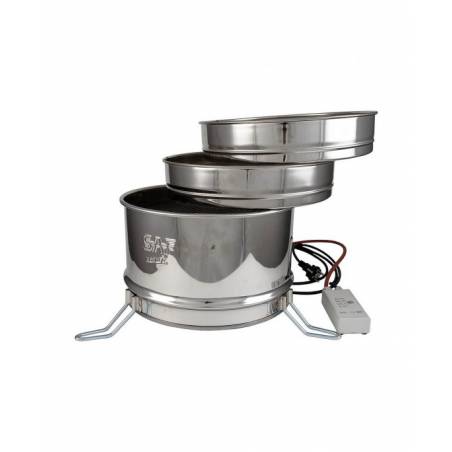
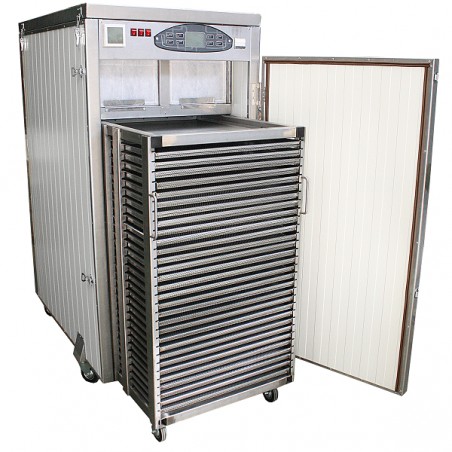
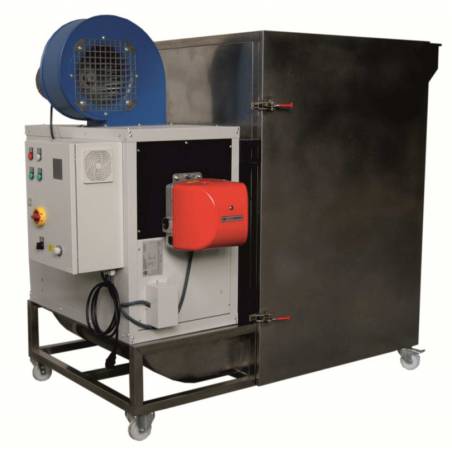
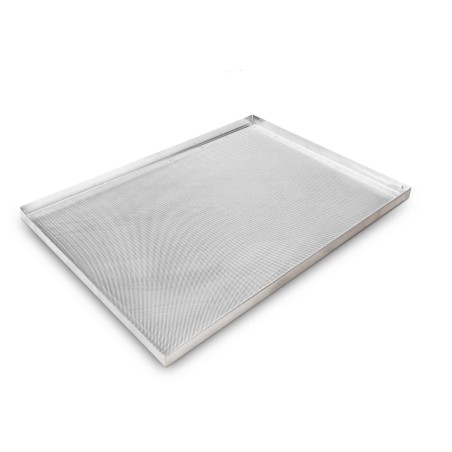
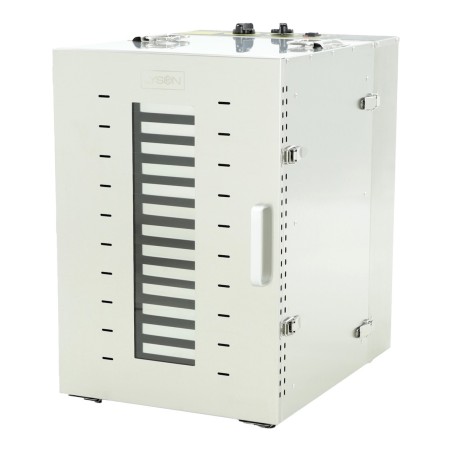
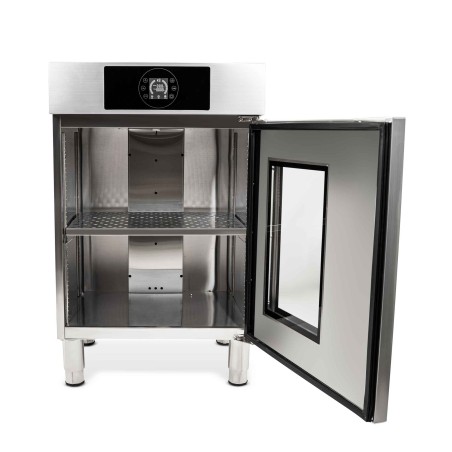
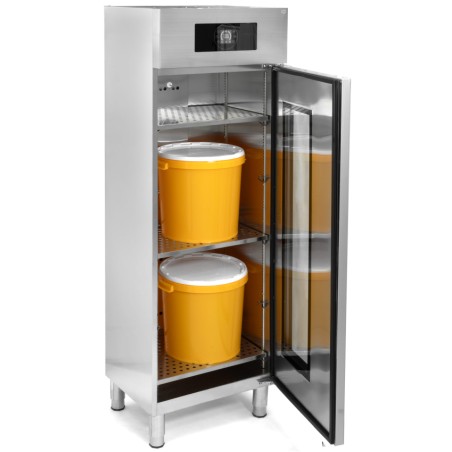
Pollen driers from 1 kg to industrial, stainless trays, extra sieves and Drysilk non-stick nets. From €29.75 to €14,395.
How to dry pollen without losing quality
A pollen dryer shouldn't be seen as a machine to “heat pollen”, but as a tool to preserve quality. The goal isn't to dry fast at any cost, but to remove moisture evenly, in a controlled way and without damaging the product. If the pollen stays moist, it keeps worse and can develop moulds or fermentations. If you dry it badly, you can lose aroma, colour, texture and commercial value. For me, the key is to work with thin layers, perforated trays, good air circulation and controlled temperature. As a practical reference, in professional handling you aim for a continuous flow of dry air, avoiding thick piles that prevent even drying.
My advice is to choose the dryer according to the real kilos you're going to collect per day, not just the theoretical capacity. Before buying, I'd look at the number and surface of the trays, temperature control, forced ventilation, ease of cleaning, food-grade materials and the convenience of loading and unloading. I'd also value that it lets you finish with cooler dry air before taking the pollen out, so it doesn't come out hot and re-absorb moisture from the environment. If you produce little, freezing or drying small batches may be enough; but if you want to sell pollen regularly, the dryer stops being an accessory and becomes a central part of the process. And here I'll take a clear stand: drying badly can ruin a good harvest. With pollen, quality is won more in the post-handling than in the trap.
Pollen dryers
Pollen leaves the trap at 20-30 % moisture. At that level it ferments and moulds within hours. Drying is not a cosmetic finish: it is what makes it a stable product.
The two numbers
The target is the 6-8 % moisture window: above 10 % fermentation risk rises, and below 6 % the grain becomes too dry and loses acceptance on the palate. And never above 40-45 ºC: beyond that, vitamins and amino acids degrade, the grain toasts and loses colour and aroma. A drier without reliable temperature control is no good for pollen — it is good for roasting it.
The range
- 1 kg (€99) — for the beekeeper harvesting their own pollen and selling it locally.
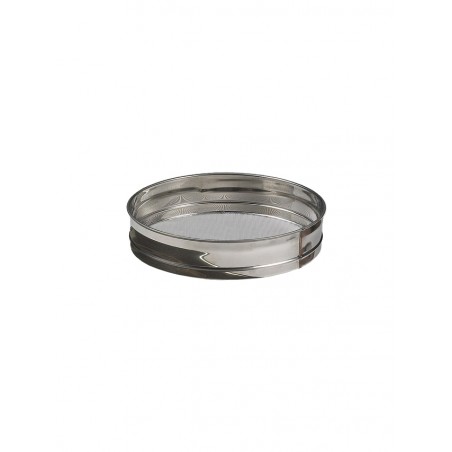
- SAF® (€299.95) — the step up to small production, with extra sieves (€45) to add capacity.
- Cabinets and industrial — stainless trays and capacity for several hives harvesting at once.
The Drysilk nets
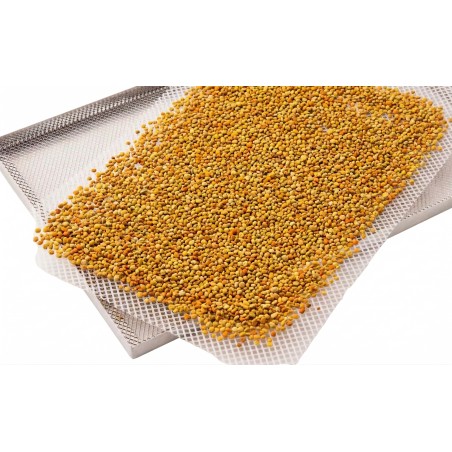
Non-stick mesh (€29.75 for a pack of 6) that keeps the grain from sticking to the tray: it turns without breaking and cleans without dragging residue. Small detail, a lot of time saved.
The trap is in pollen traps; the finished product in pollen.
At what temperature and to what moisture should pollen be dried?
The quality target is 6-8 % water, not drying as much as possible. Above 10 % fermentation risk rises; below 6 % the grain becomes too dry and loses acceptance on the palate.
On temperature, the lower the better: to preserve sensitive components a technical maximum of 30 ºC is cited, though Spanish industrial practice works with continuous-air driers at around 40 ºC. Spread the pollen in thin layers, no more than 2 cm, on a perforated tray. And never in the sun: it discolours, degrades and exposes the batch.
Can pollen be taken out of the drier while hot?
No, and it is the step most people skip. Before removing it you should circulate cold, dry air for about 10-14 minutes. If the grain comes out hot into the room, it reabsorbs moisture as it cools and leaves the batch above target right after you have dried it.
It is a matter of minutes that decides whether the drier's work holds or is lost in the final half hour. Then straight to airtight packing or cold storage: dried pollen attracts moths, weevils and rodents.