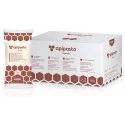
 Apipasta with vitamins 15kg
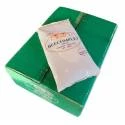 Beecomplet® Spring 14Kg
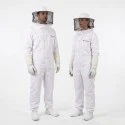 Beekeeper suit with round veil
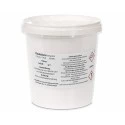 Oxalic acid 1kg
 Beeswax Foundation 5kg
 Fresh royal jelly 20g
 Classic honey jar 1kg comb-lines TO77 - Pack of 16 units
 Promotor L Apis 1 litre
- Out of stock

 Share in WhatsApp
Acorn honey: the name puzzles people because it does not come from a flower. It comes from the oak.
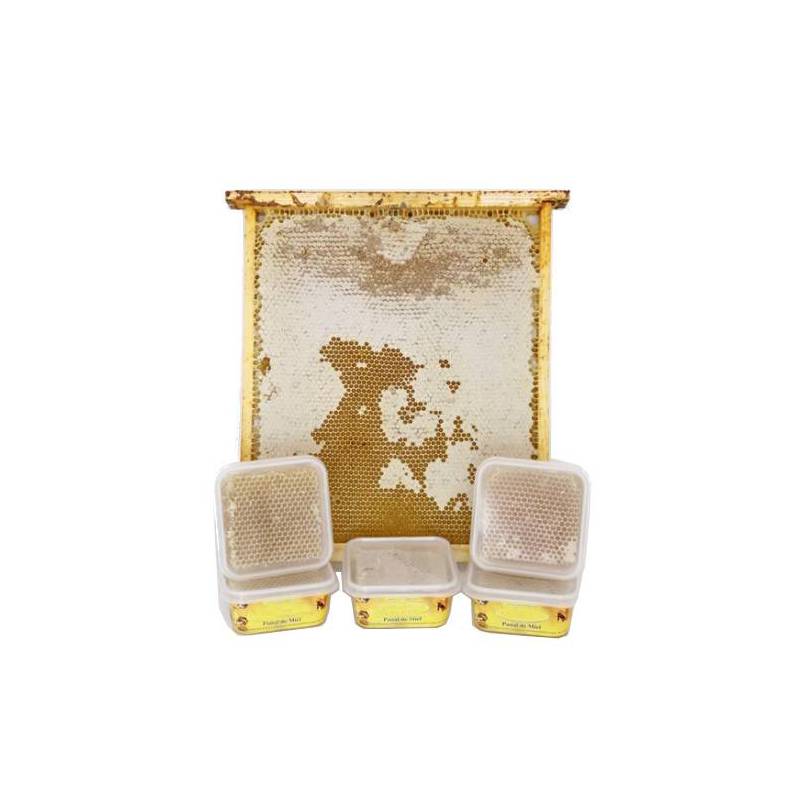
A 250 g piece of comb in a tub, with the honey still in its own wax. Harvested at 1,500 metres in the Sierra Norte of Guadalajara, between the beech woods of Montejo and Tejera Negra.
01 · WHERE IT COMES FROM
In July and August, when the acorns on the Pyrenean oaks of those slopes are the size of a chickpea, they give off a sweet drop and the bees gather it. It is not floral nectar: it is a honeydew honey, and that explains how it behaves — dark colour, a taste less sweet and deeper than a floral honey, and slow crystallisation that keeps it fluid for a long time.
It is a honey with a short season: two months of gathering on a handful of high mountain slopes.
02 · HOW IT COMES AND HOW TO EAT IT
It comes in a sealed tub with a cut piece of comb. Cut a small piece, press the wax in your mouth and enjoy the honey; the wax is spat out afterwards, like chewing gum.
One thing worth knowing beforehand: the piece is cut from a frame, so the cells along the cut are open and the surface is not capped from edge to edge. That is what a real comb looks like, not a moulded piece.
As with all honey, it should not be given to children under twelve months.
03 · BEFORE YOU BUY
It is a natural, seasonal product, with what that brings:
| ✓ FITS | Cheeseboards, breakfast and gifts: served whole and cut at the table. |
| ✕ DOES NOT FIT | For sweetening or cooking: jarred honey is for that. |
| Contents | 250 g of comb with its honey |
|---|---|
| Origin | Sierra Norte of Guadalajara, at 1,500 m |
| Type of honey | Oak honeydew, not floral nectar |
| Harvest | July and August |
| Presentation | Sealed tub, 11.5 × 11.5 × 5.3 cm |
| Eating it | Chew and spit out the wax. Not for children under 12 months |
| Reference | PNLB144 |

check_circle
check_circle