 Apipasta with vitamins 15kg
 Beecomplet® Spring 14Kg
 Beekeeper suit with round veil
 Oxalic acid 1kg
 Beeswax Foundation 5kg
 Fresh royal jelly 20g
 Classic honey jar 1kg comb-lines TO77 - Pack of 16 units
 Promotor L Apis 1 litre

 Share in WhatsApp
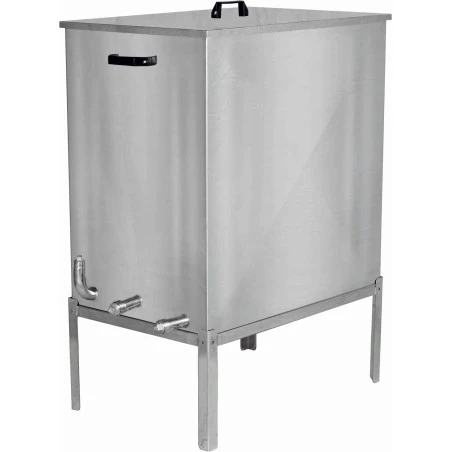
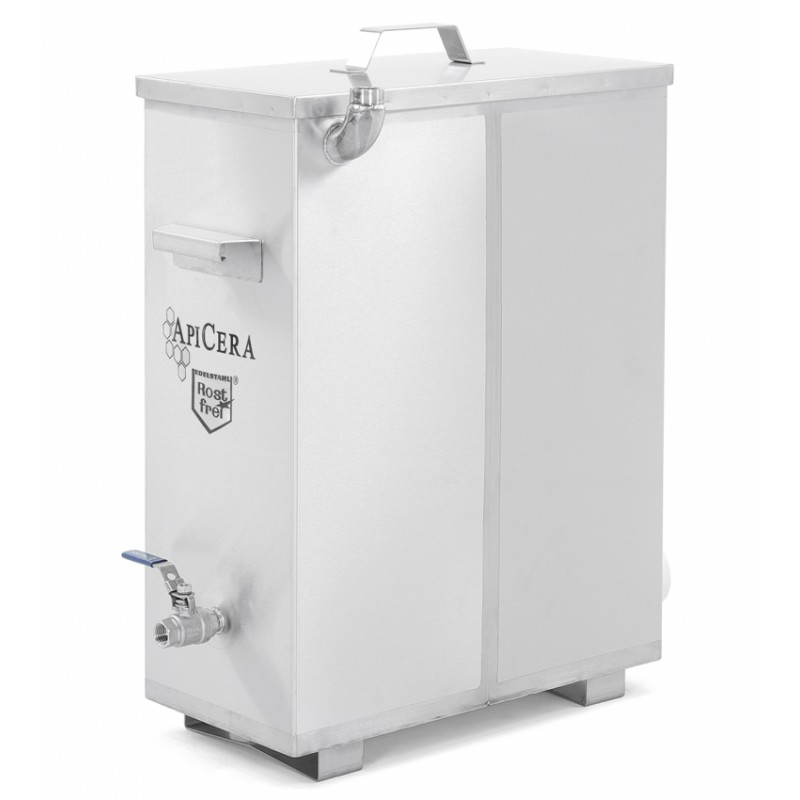
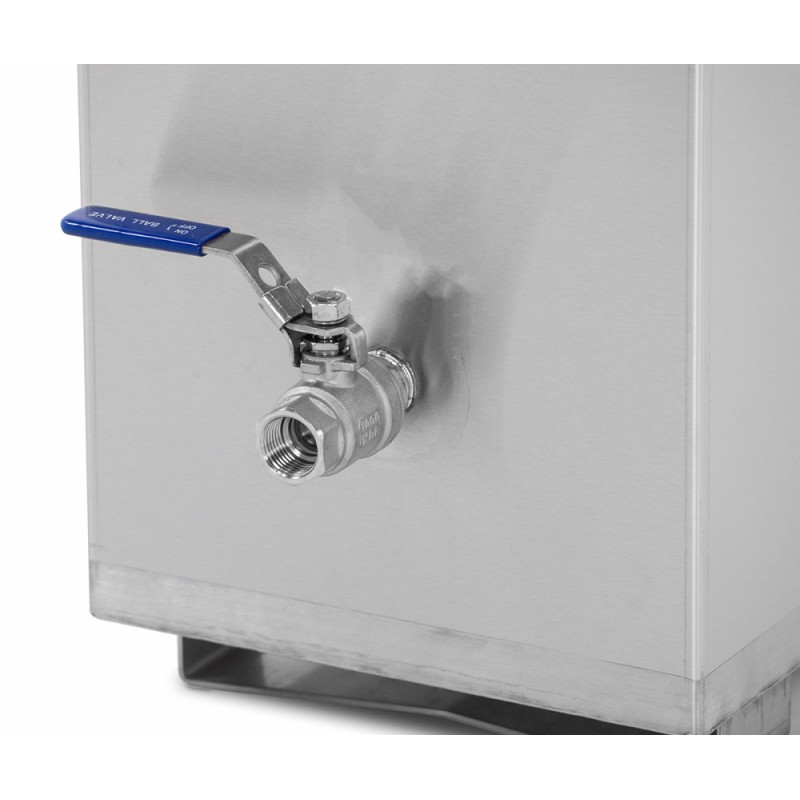
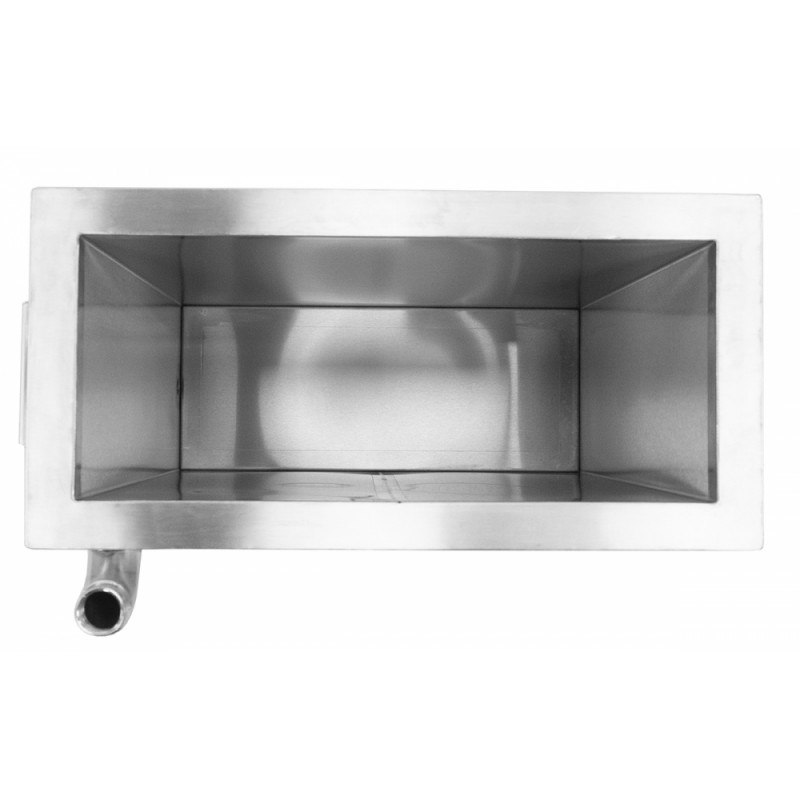
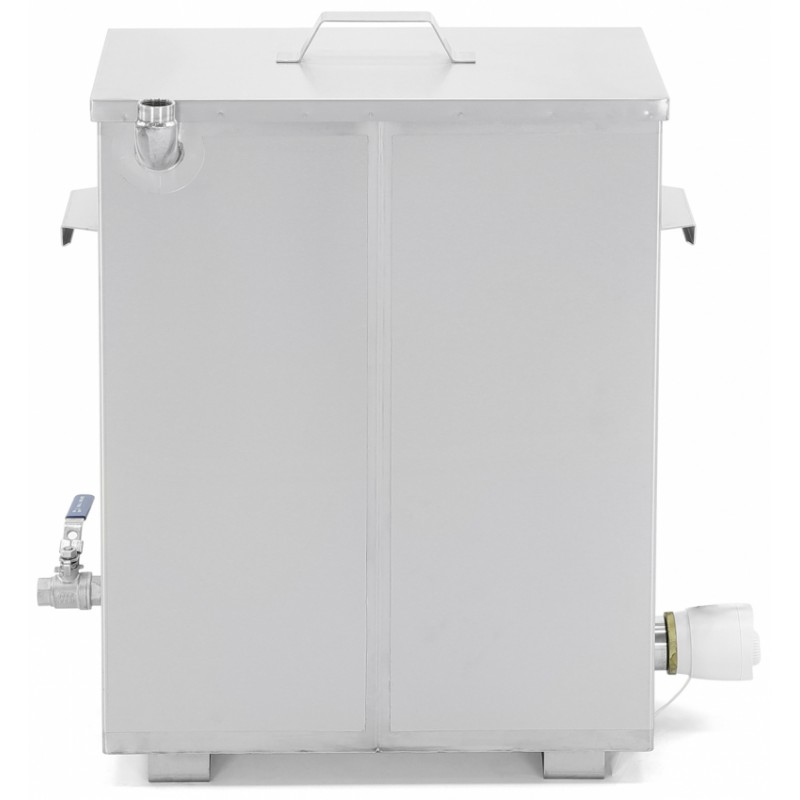
Rectangular double-walled tank (to fill with water). It is used to melt beeswax.
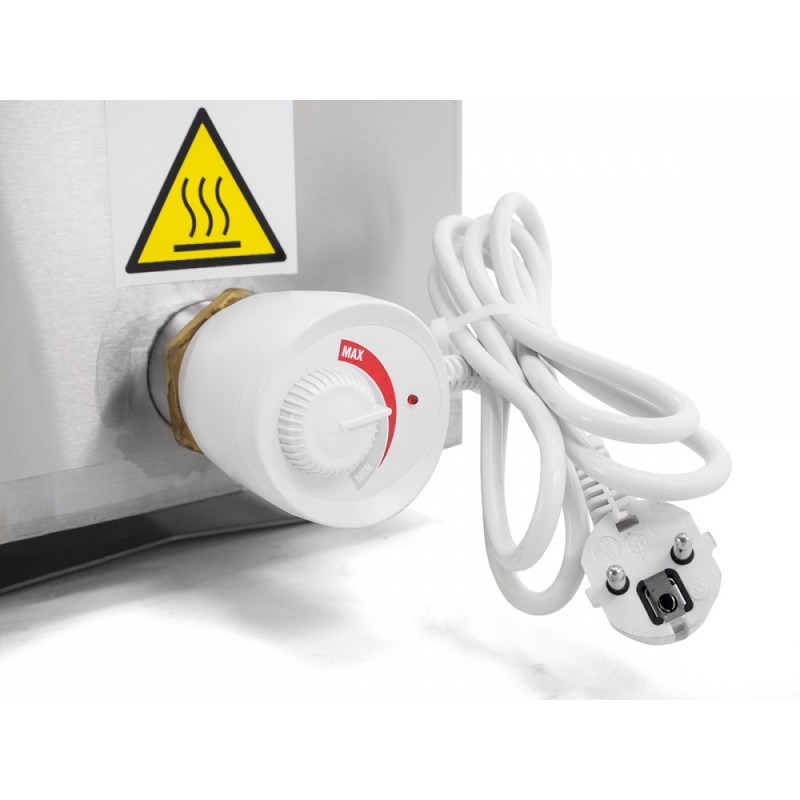
Rectangular double-walled stainless tank for melting and clarifying up to 30 kg of wax in a water bath. 2,000 W element, thermostat from 0 to 85 °C and a half-inch outlet valve.
The thermostat reaches 85 °C. That is where wax starts to darken. There is no need to go near it: at 65-70 °C the wax is molten and keeps its colour.
01 · THE THERMOSTAT GOES TOO HIGH
Beeswax melts at 62-65 °C. With the thermostat at 65-70 °C you have wax that is liquid and workable, and still margin before the point where above roughly 85 °C it starts to darken and lose its scent.
Turning the thermostat to the top does not speed things up much and it does cost you colour. And do what the machine itself recommends: check with an external thermometer, because the thermostat reads the water or the wall, not the wax.
02 · HOW LONG WITH A FULL TANK
With 29 litres of water and 30 kg of wax starting cold, a 2,000 W element needs on the order of two and a half to three hours. That is not the machine being slow: it is physics.
More than half that energy goes into the latent heat of fusion — wax absorbs an enormous amount of heat while turning from solid to liquid without rising in temperature — and much of the rest into heating the water. That is why turning up the thermostat does not shorten it: that heat has to be supplied regardless. What does help is breaking the wax up before loading it and not filling the tank to the brim when you do not need to.
03 · OTHER WAXES YES, SOAP BETTER NOT
It melts other waxes without trouble: vegetable ones such as rapeseed wax ask for even less heat than beeswax. And it serves what wax needs next — candles, foundation and coating plastic frames so the bees will accept them.
What we do not recommend is alternating with soap base or other materials. Wax leaves a film on the steel and in the gaskets that hot water will not remove. If you work pure vegetable wax to sell as such, that residue is also a traceability problem: one tank, one material.
04 · THE WATER AND THE 2,000 W
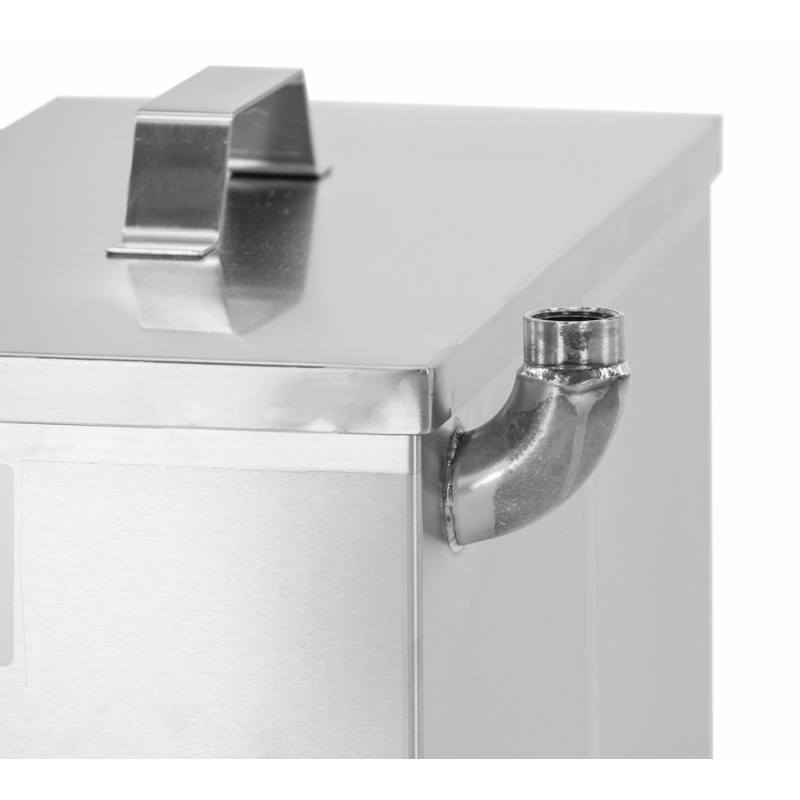
It is filled with water up to the level of the inverted elbow, and that level gets watched: if it dries out, the element works empty. It is the classic failure of any water bath.
And one check before buying that is easily forgotten: 2,000 W in a workshop that already has an extractor, a decrystalliser and lights may ask for more than the circuit gives. Look at the board first.
05 · THE OUTLET IS HALF AN INCH
The outlet valve is Ø ½ inch, worth keeping in mind because it does not match the honey line, which in a honey house is inch and a half. Your extractor fittings and hoses will not serve here.
The tank measures 65 × 28 cm and 68 cm high, and weighs about 19 kg empty. Full of water and wax it goes past 75, so put it where it is going to stay.
06 · BEFORE YOU BUY
Check the electrical supply for the 2,000 W, and decide which material the tank is for: alternating is not a good idea.
| ✓ RIGHT FIT | Melting wax in quantity for candles, foundation or coating frames. |
| ✕ WRONG FIT | Alternating wax with soap base or other materials. |
| ⚠ NOT INCLUDED | External thermometer, moulds or filter. |
| Reference | W4099_SET |
|---|---|
| Build | Double-walled stainless steel — 1 mm outer, 1.5 mm inner |
| Wax capacity | Around 30 kg |
| Bath water | Around 29 litres, to the inverted elbow |
| Element | 2,000 W / 230 V |
| Thermostat | Adjustable 0 to 85 °C — work at 65-70 °C |
| Melting time | 2.5 to 3 h with a full tank from cold |
| Outlet | Ø ½ inch valve |
| Size | 65 × 28 cm · 68 cm high |
| Empty weight | About 19 kg |
Data sheet
Rectangular double-walled tank (to fill with water). It is used to melt beeswax.
check_circle
check_circle