 Apipasta with vitamins 15kg
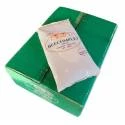 Beecomplet® Spring 14Kg
 Beekeeper suit with round veil
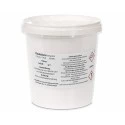 Oxalic acid 1kg
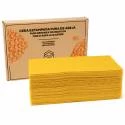 Beeswax Foundation 5kg
 Fresh royal jelly 20g
 Classic honey jar 1kg comb-lines TO77 - Pack of 16 units
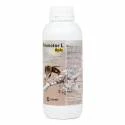 Promotor L Apis 1 litre

 Share in WhatsApp
27 m³/min AIR FLOW | 11 kg ON YOUR BACK |
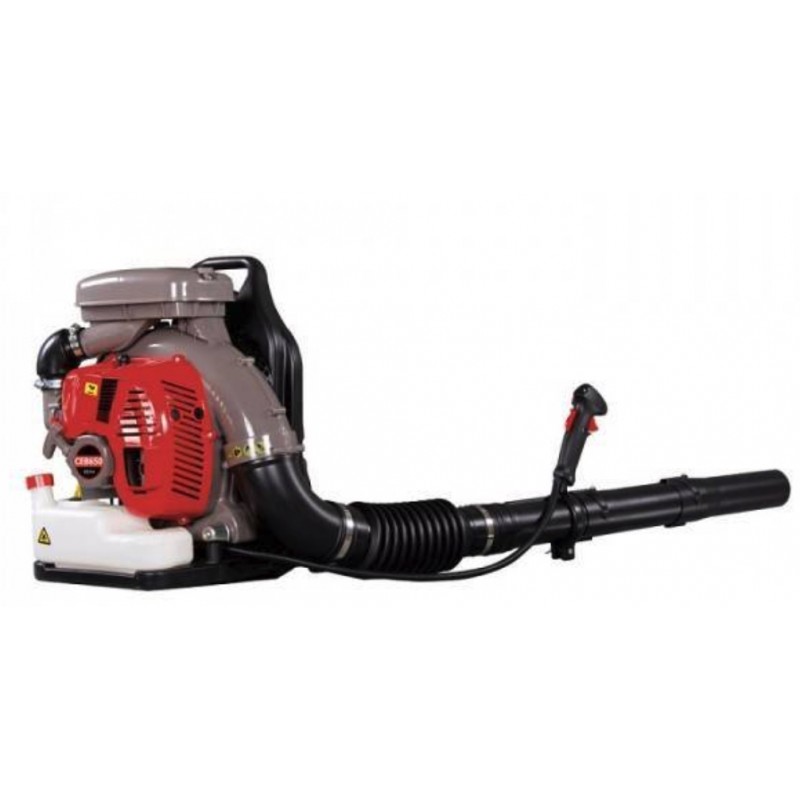
Backpack blower with a two-stroke petrol engine and 27 m³/min of air flow, for clearing bees from supers in apiaries with no mains supply.
It empties a super in seconds. That is its merit and its problem.
01 · SPEED IN EXCHANGE FOR UPROAR
Worth being clear about the comparison before buying. A bee escape clears the super on its own, silently and unnoticed, but it takes hours and costs you an extra visit. A blower clears it in seconds — in exchange for leaving bees in the air and the colony stirred up. If you work many hives in a single visit, the blower wins comfortably; if your concern is a quiet apiary or you have neighbours close by, the escape is still the better tool.
02 · MIND THE ROBBING
This is the field mistake that costs most with this machine. Blowing leaves disoriented bees in the air and honey exposed, and if at that moment there is no nectar coming in, the apiary can start robbing within minutes. The rules are the usual ones and here they count double: work fast, do not leave supers uncovered longer than needed, avoid spills, cover what you have already cleared and reduce entrances if things start to liven up. With a strong flow the risk drops a long way; at the end of the season, it does not.
03 · THE AIR CAN DO DAMAGE TOO
Twenty-seven cubic metres a minute is a lot of air. Take the super off, set it on a stable base and direct the stream so the bees fall towards a safe area — never at people, vehicles or wet ground. Start with the nozzle well back and close in only as far as you must: up close, the air can distort freshly drawn comb or new wax, and in open cells it displaces nectar. And a limit of use: it is meant for honey supers, not brood boxes. The machine blows; it does not suck and must not be used as a vacuum.
PETROL, NOISE AND FUMES
Use hearing, eye and respiratory protection suited to the setting: the declared figure is 99 dB(A) sound power, and these are hours of work. Start and refuel as the manual says, with the engine stopped and cold and away from flames. Do not use it in enclosed spaces because of the exhaust fumes. The fuel mix ratio and engine maintenance are not on this page: they are in the CEB-800 manual and must be followed.
04 · BEFORE YOU BUY
That is 11 catalogue kilos on your back plus a petrol engine, so weigh three things before taking it to the field: the effort of carrying it between hives, the fuel you have to carry with you, and the fire-risk restrictions that in summer, in many regions, govern when you may start a combustion engine in open country. If your apiary has power nearby, an electric blower saves you that whole set of problems.
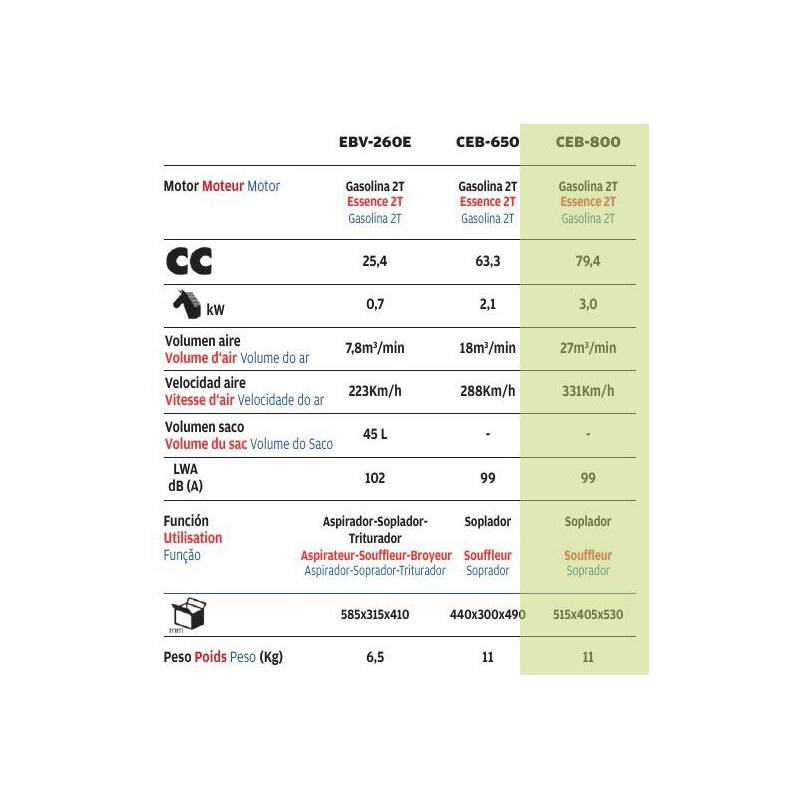
| Model / reference | Campeón CEB-800 · CEB8001 |
|---|---|
| Engine | 2-stroke petrol · 79.4 cm³ |
| Power | 3 kW |
| Air flow | 27 m³/min |
| Sound power | 99 dB(A) |
| Weight | 11 kg (catalogue) |
| Function | Blowing only — no suction |
| Intended use | Clearing bees from honey supers |
Specific References
check_circle
check_circle